
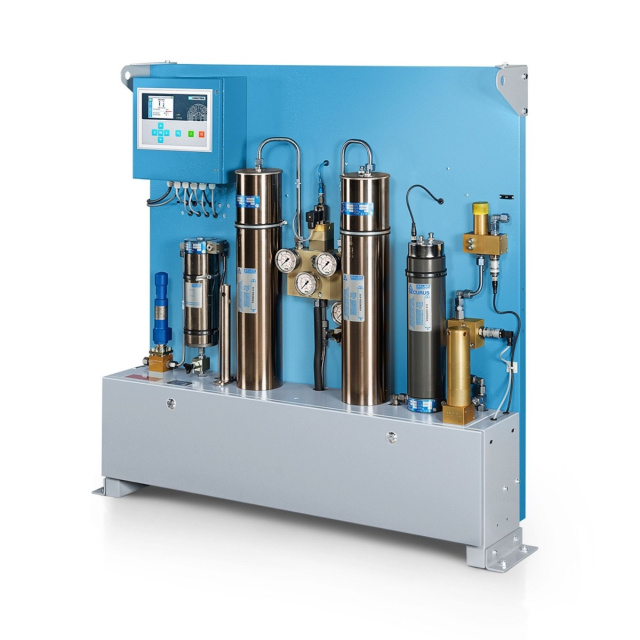
SECCANT
Regeneration dryers from the SECCANT series by BAUER KOMPRESSOREN in the pressure range 50–420 bar
- Up to 420 bar
- Continuous operation with automatic switchover
- Optional oil removal and CO reduction
Request product
- SKU
- SECCANT-IND
In stock
Technical Data
BAUER SECCANT desiccant dryers
| SECCANT III and IV – for Air, Nitrogen, Helium and Argon – pressure dew-point -20°C | ||||
|---|---|---|---|---|
| Model designation | Flow rate | Pressure range | ||
| l/min | m³/h | cfm | bar | |
| SECCANT III | 500 – 1500 | 30 – 90 | 18 – 53 | 90 – 350 / 420 |
| SECCANT IV | 1500 – 3500 | 90 – 210 | 53 – 124 | 90 – 350 / 400 |
| SECCANT – for Air and Nitrogen – pressure dew-point -20°C, -40°C, or -55°C | ||||
|---|---|---|---|---|
| Model designation | Flow rate | Pressure range | ||
| l/min | m³/h | cfm | bar | |
| SECCANT x/50 | 1000 – 12000 | 60 – 720 | 35 – 424 | 25 – 50 |
| SECCANT x/100 | 1000 – 15000 | 60 – 900 | 35 – 530 | 50 – 100 |
| SECCANT x/250 | 1000 – 25500 | 60 – 1530 | 35 – 900 | 110 – 250 |
| SECCANT x/420 | 1800 – 30000 | 108 – 1800 | 64 – 1059 | 250 – 420 |
-
Details & Features
BAUER SECCANT desiccant dryers have been developed for the reliable drying of air and gases at high operating capacities and ambient temperatures. Automatic changeover between drying and regeneration modes ensures continuous operation. The systems are equipped with pre-separation, particle filter, electronic control and soft switchover as standard. An activated carbon adsorber for oil removal and an additional filter for CO reduction can be integrated as options – ideal for industrial, medical and breathing air applications with the highest air quality requirements.
Control
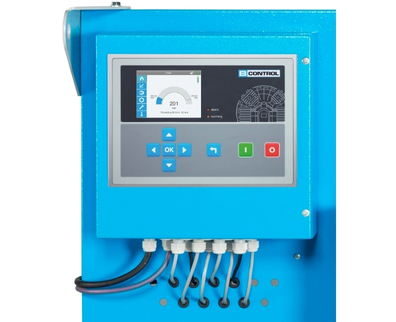
The standard use of its own control system makes the SECCANT series independent from the compressor control. Only a start/stop signal from the compressor control is required. At the same time, the B-CONTROL dryer control offers the possibility to transmit additional data via bus line to the compressor control or other monitoring devices.
Continuous drying
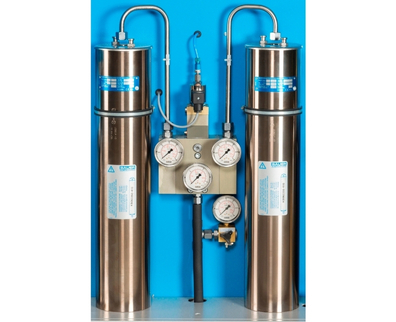
Both dryer vessels operate in parallel: one dryer vessel runs in drying mode, the other in regeneration mode. The automatic switching between modes is carried out by the control system. This ensures a constant supply of treated medium.
Pressure retention non-return valve
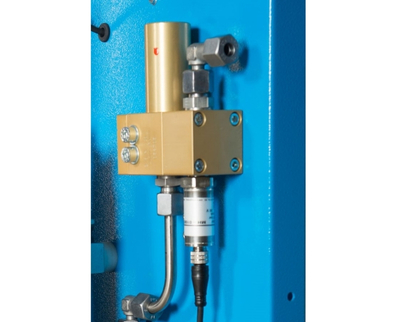
Equipping the SECCANT regeneration dryer with a suitable pressure retention valve ensures a minimum pressure in the filter vessels. This prevents the maximum flow velocity in the filter vessel from being exceeded. Thus, the required contact time between medium and adsorbent is ensured from the start.
Options
B-SECURUS filter monitoring
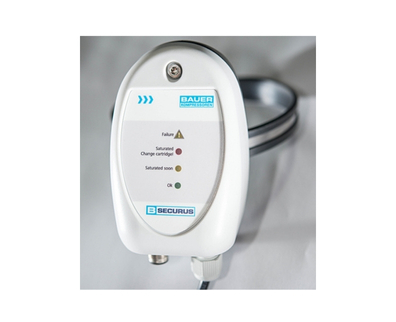
The B-SECURUS system monitors the saturation of the filter cartridge(s) by measuring the moisture level in the molecular sieve and provides a timely indication when a cartridge replacement is required – either on the display or via the control unit. Once saturation is reached, the system automatically shuts down the unit. The B-SECURUS filter monitoring system can only be used in conjunction with the P 41, P 61, or P 81 filter systems, as well as the external BAUER filter systems.
A-version (activated carbon)
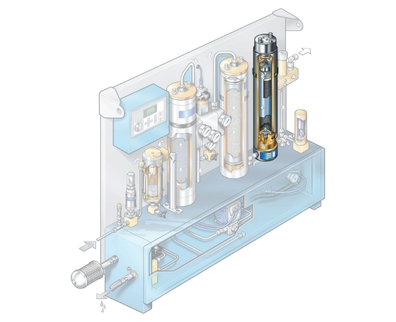
Optionally, the SECCANT regeneration dryers can be equipped with an additional filter vessel. This contains activated carbon for removing oil and hydrocarbons from the compressed medium.
Dew point monitoring
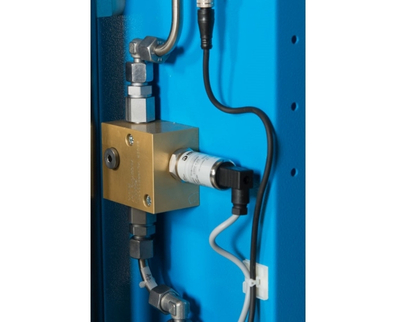
Dew point monitoring is integrated into the regeneration dryer and linked to the control system. This ensures continuous measurement of the pressure dew point or moisture content of the compressed air, which is displayed in the control system.
CO conversion
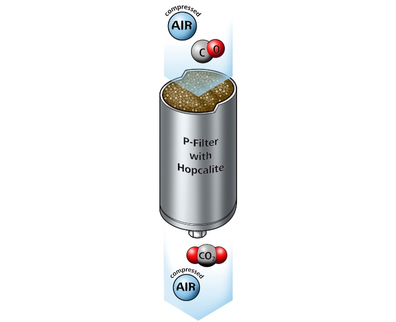
For air treatment, the toxic carbon monoxide (CO) present in the air is converted into carbon dioxide (CO₂). Due to the low CO content, the CO₂ concentration increases only slightly. Depending on the air treatment system, the CO conversion takes place either in a filter vessel together with oil removal or in a separate filter vessel. The “CO conversion” option is only available in combination with the “oil removal” option.
-
Downloads
-

BAUER helium recovery system goes into operation at Hamburg University
The abbreviation CHYN stands for one of Germany’s most cutting-edge research institutions, the new Center for Hybrid Nanostructures.
see more